Why Carson City's Median Home Price Can't Tell You What You'll Actually Get
August 20, 2026
August 20, 2026
Search "Carson City median home price" this summer and you'll get a different number depending on where you look. Redfin's trailing three months through May 2026 put it at $490,000. Zillow's typical-value tracker showed roughly $450,000 as of June 2026. Movoto's May 2026 closings landed at $580,000. A live MLS pull from mid-July 2026 showed $545,000 across the prior 90 days of closings. None of these sources made an error. They're each averaging a different sample of the same three markets, and which one shows up in a given month's closings changes the number more than anything happening to the broader economy.
That's the actual story here. Carson City doesn't have one housing market with a single price curve. It has three, sitting inside overlapping zip codes, and the citywide median is just whatever blend of the three happened to close escrow in whichever window a given site chose to measure. A buyer who shops the median as if it describes one product is going to misjudge both the price and the risk of what they're buying.
Here's the detail that makes this concrete rather than theoretical. Zip code 89703, on the west side of the city, contains roughly 5,000 residential households spanning 1880s-era homes downtown through mid-century ranch houses and modern custom infill. Lot sizes in that zip run from about 0.15 acres in the historic core to 1.5 acres or more on the rural western edge. Homes range from 1,100 square feet to over 4,500. Average across the whole zip code lands near 2,100 square feet, which tells you almost nothing useful, because that average is blending a two-bedroom cottage a few blocks from the Capitol with a five-bedroom new-construction home on a golf course fairway. Both sit inside 89703. Neither behaves like the other.
The golf-course side of that same zip is Silver Oak, a community built around an 18-hole public course in the northwest foothills. Existing homes there have listed anywhere from the mid-$500,000s into the $900,000s and above for larger or fairway-fronting lots, with a median list price near $610,000 as of June 2026. New construction inside Silver Oak, sold under the name The Fairway at Silver Oak, starts at $734,000 to $739,000 for four single-story floor plans running roughly 2,100 to just under 2,500 square feet. That starting price sits in the same zip code as historic-core homes that run as small as 1,100 square feet, at a fraction of the cost. The premium isn't paying for space. It's paying for a warranty, a modern floor plan, and a fairway.
| Sub-market | Typical square footage | Typical lot | Structure | What the price is really buying |
|---|---|---|---|---|
| West Side historic core | 1,100 to 2,300 sq ft | 0.15 to 0.25 acre | No HOA, but historic-district design review on exterior work | Walkability, character, proximity to downtown and the Capitol |
| East and South new-construction corridor | 1,364 to 2,594 sq ft | 5,600 to 13,400 sq ft (roughly an eighth to a third of an acre) | Builder HOA, standard suburban covenants | New systems, builder warranty, lower entry price |
| Northwest foothills and golf-course tier | 2,100 to 2,500+ sq ft | 0.25 acre to 1.5+ acres | HOA covering common landscaping, private-road snow removal, architectural review | View, land, and a lower-maintenance new build |
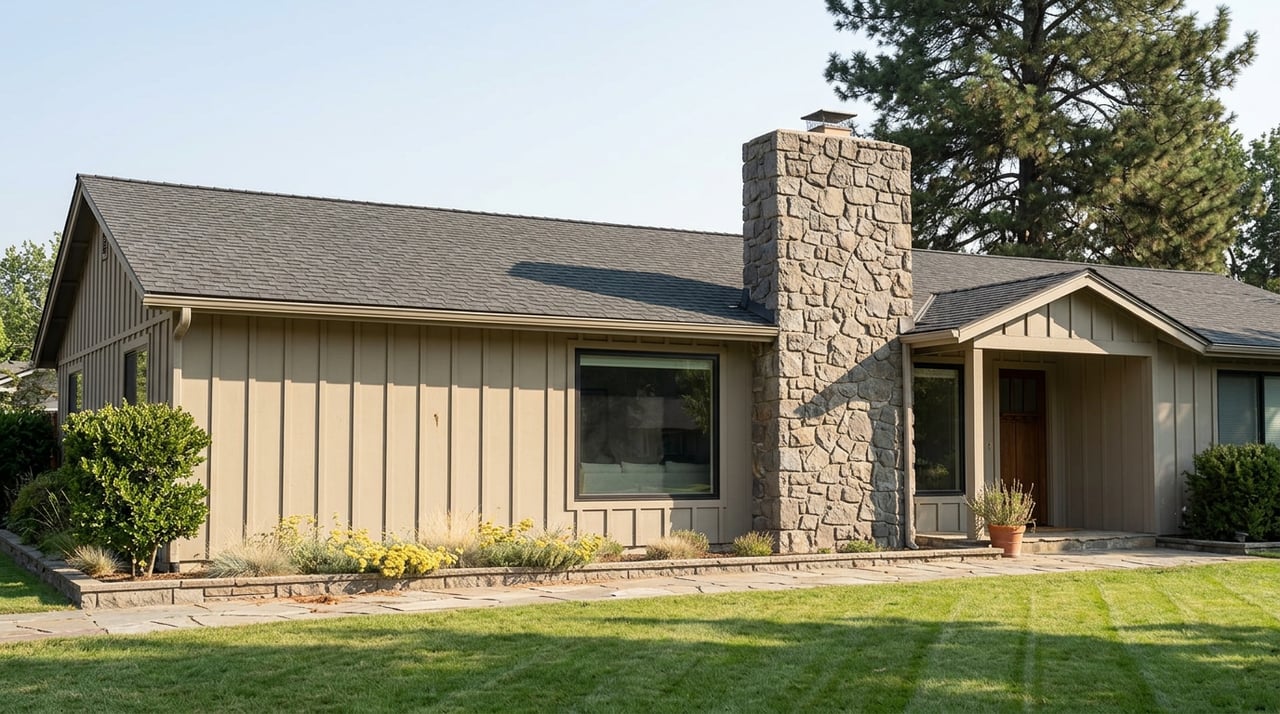
The historic west side is the part of Carson City most people picture when they think of the city's identity: tree-lined streets, homes dating to the 1880s through the 1960s, walking distance to Mills Park's aquatic center and mini-train, the Governor's Mansion, and the downtown Blue Line walking tour. Most of West Carson City carries no HOA at all, which means day-to-day property use falls under standard municipal code rather than a homeowners association. The exception is the West Side Historic District itself, which carries additional design-review guidelines specifically governing exterior renovations, intended to preserve the architectural character of the block.
That district guideline cuts both ways for a buyer. It protects the character that makes the neighborhood valuable, but it also means a fast exterior remodel isn't necessarily a fast approval. And because a meaningful share of the housing stock here predates 1970, older-systems inspection scrutiny (original plumbing, older electrical panels, aging foundations) matters more here than it does in a subdivision built five years ago. The zip code sees between 150 and 250 home sales a year, a small enough pool that one unusual sale can swing the local average noticeably.
If you're shopping under $450,000 in Carson City, you're very likely shopping the east or south side, not the west side or the foothills. Citywide, 119 of the 389 active listings tracked in a mid-July 2026 snapshot sat below that price point, and that entry tier is concentrated in newer subdivisions and condos rather than the historic core.
Timberline Crossing, built by Jenuane Communities in east Carson City off Highway 50, is a clear example of what that tier actually looks like. It offers two collections across 11 floor plans: the Floral Grove Collection of single-family homes and the Silverwood Commons Collection of townhome-style condominiums, ranging from 1,364 to 2,594 square feet on lots between 5,600 and 13,400 square feet. Nearby, new-construction listings from a national builder in the same corridor have priced as low as $449,990 for a 1,869-square-foot home and $552,990 for a 1,720-square-foot home in a July 2026 market snapshot. The trade here is straightforward: smaller lots, but new systems, a builder warranty, and the lowest entry price in the city.
The northwest foothill tier is where Carson City stops being an entry-level market. Beyond Silver Oak, the rural fringe includes Kings Canyon and Ash Canyon, foothill neighborhoods known for larger lots, sunset and mountain views, and direct access to the Kings Canyon Waterfall and the Ash-to-Kings Canyon trail system. Some parcels here are zoned to allow horses, generally requiring a minimum of one acre, which tells you how much this tier is selling land and lifestyle rather than interior square footage.
Further into the wooded canyon setting near Washoe Lake sits Lakeview, where one estimate put the average home value around $742,683, roughly 52 percent above the citywide average. And at the top of the range, citywide data from a mid-July 2026 snapshot showed 158 active listings priced above $700,000, with a median near $1.09 million in that tier, and the Clear Creek Tahoe area alone holding roughly 68 of those listings near a $1.4 million median. That's the ceiling the citywide median gets blended against every time a luxury foothill property closes in the same window as a Timberline Crossing starter home.
The most useful way to think about a Carson City budget isn't "how much house does this buy." It's "which of these three markets does this budget put me in." Move roughly $90,000 to $100,000 up or down from wherever you're currently shopping and you're not just adding or losing square footage. You're often crossing into a different sub-market entirely, with a different HOA structure, a different inspection profile, and a different reason the price is what it is:
Knowing which sub-market you're actually shopping changes what you verify before you make an offer. On the west side, that means budgeting for an inspection that looks closely at original-era plumbing, electrical, and foundation condition, and understanding what the historic district's design-review guidelines will and won't allow if you plan to renovate the exterior. On the rural foothill fringe, it means confirming well and septic status early, since that tier isn't uniformly served by municipal utilities the way the east-side subdivisions are. In a new-construction community like Silver Oak or Timberline Crossing, it means reading the HOA documents closely, since dues there typically cover landscaping, private-road snow removal, and architectural review rather than nothing at all.
Does the historic West Side allow renovations, or is everything restricted by design guidelines? Exterior work is subject to design-review guidelines within the West Side Historic District specifically, intended to preserve the district's architectural character. Interior renovations and work outside the historic district boundary generally follow standard Carson City municipal code rather than a design-review process.
Are the foothill communities served by the same school district as the rest of the city? Yes. Carson City maintains its own school district, separate from Washoe County, and that district serves the city as a whole, from the historic core through the foothill communities.
If I'm comparing Carson City to Reno, does the same zip-blending problem apply there too? Reno's market spread is even wider, with citywide neighborhood values ranging from the low $200,000s to well over $2 million depending on the pocket. The same principle applies: a citywide median in a market with that much internal variation tells you less than knowing which specific neighborhood or price band you're actually comparing.
Carson City rewards buyers who know which of its three markets they're actually shopping before they start touring. That's the kind of groundwork Team Tatro walks through with every buyer, whether the goal is a west-side bungalow with real history, a new build in the foothills, or something in between. Reach out for a free home valuation and a straight read on what your budget actually buys in this city right now.
Experience award-winning service and local expertise for your next move. Let Team Tatro help you achieve your real estate goals with confidence.